
Sewage Backup Cleanup & Biohazard Removal — Northern Illinois
Sewage backup is the most serious water emergency a homeowner faces. The water is Category 3 — contaminated with bacteria, viruses, and pathogens that pose real health risks. This is professional work requiring proper PPE, containment, and disinfection protocols. We serve McHenry, Lake, Kane, DuPage, and northern Cook County 24/7.
Why Sewage Backup Requires Professional Cleanup
Sewage is classified as Category 3 water — “black water” containing pathogens that can cause serious illness. Standard cleaning products and household equipment are not sufficient. Here is what you’re dealing with.
Bacterial Contamination
Sewage contains E. coli, Salmonella, and other bacteria that cause serious illness. Direct contact or inhalation of aerosolized particles poses real health risks. This is not a cleanup job for a shop vac and paper towels.
Viral Pathogens
Hepatitis A, norovirus, and other viruses can be present in sewage. They survive on surfaces for days to weeks after the water is removed. Effective disinfection requires professional-grade antimicrobials, not household cleaners.
Parasites
Cryptosporidium and Giardia are waterborne parasites that can be present in sewage backup. Resistant to many standard disinfectants, they require specific treatment protocols.
Mold Risk
Sewage backup leaves organic material behind even after visible water is removed. Combined with the moisture, this creates an accelerated mold risk — not just from water, but from the organic substrate the sewage leaves on every surface it touched.
Sewage Backup Cleanup — Step by Step
Our sewage cleanup protocol follows industry standards for Category 3 water removal. Every step is documented for your insurance claim.
Site Safety & Containment
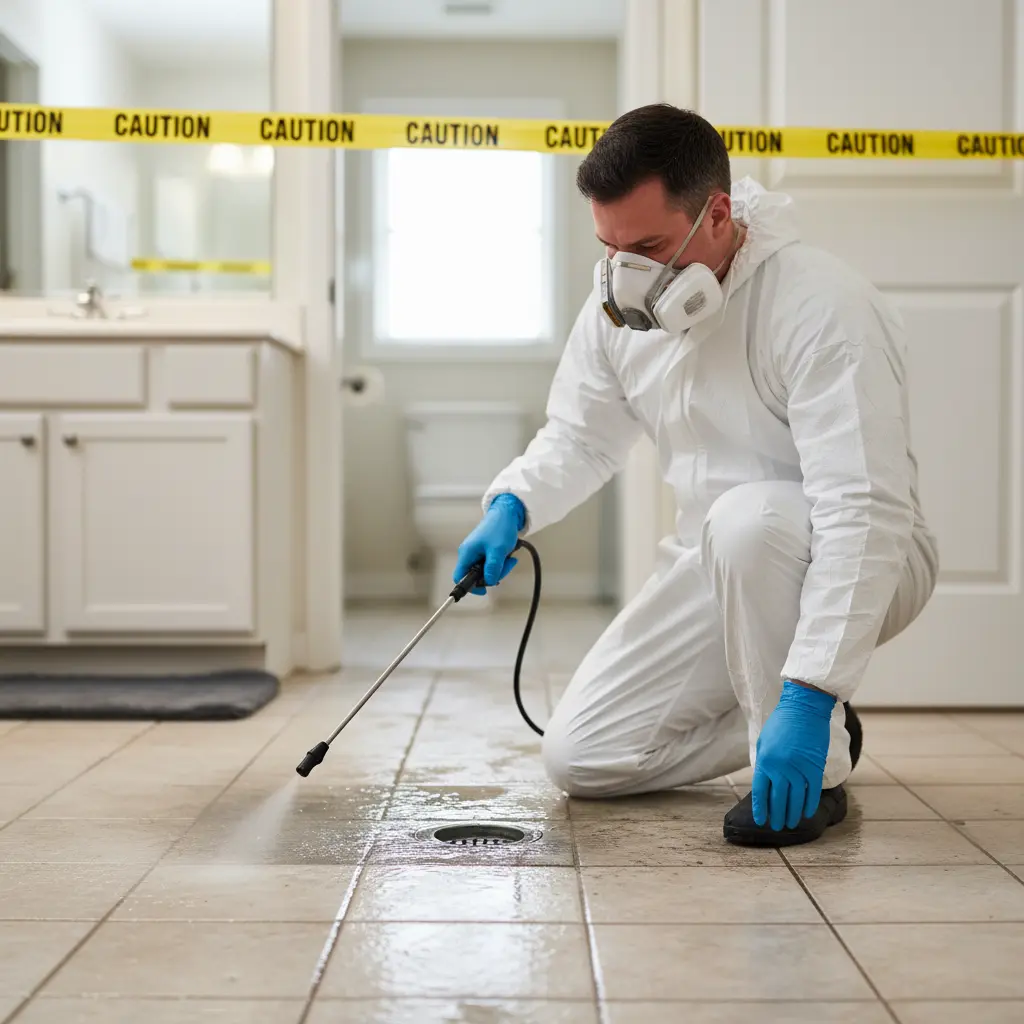
We arrive in proper PPE — respirators, Tyvek suits, gloves, and waterproof boots. Before any cleanup begins, we establish containment to prevent contamination from spreading to unaffected areas. HVAC is isolated if needed. This is not optional.
Category 3 Water Extraction
Sewage water is Category 3 — the highest contamination level in industry classification. We extract it with equipment that can be properly decontaminated after use. All extracted material is disposed of per applicable regulations.
Removal of Unsalvageable Material
Porous materials that absorbed Category 3 water — carpet, pad, drywall, insulation — typically cannot be sanitized to a safe standard. We document what needs removal and handle the disposal. This is the honest answer, and we'll tell you clearly what can be saved and what can't.
Thorough Disinfection
All affected hard surfaces receive multiple applications of professional-grade antimicrobial and disinfectant solutions. We don't just spray and wipe — we use dwell times and second passes to achieve the decontamination these pathogens require.
Structural Drying
Once the area is decontaminated, commercial dehumidifiers and air movers are placed to dry the structure. We monitor moisture daily. Drying sewage-affected areas often takes longer because more material removal was needed before drying can proceed.
Final Clearance Documentation
We document the full scope: contamination extent, materials removed, disinfection applied, and final moisture readings. This documentation is critical for insurance claims and gives you a record that the space was professionally decontaminated.
Signs of Sewage Backup — Call Us Immediately
Do not wait to see if it gets better. Sewage backup typically worsens until the source is resolved, and every hour of contact increases contamination spread.
Sewage Backup Cleanup — FAQ
Is sewage backup covered by homeowner's insurance?
Standard homeowner's policies typically do NOT cover sewage backup unless you have a specific sewer/drain backup endorsement. This is a separate rider that many homeowners don't have. Flood insurance also does not typically cover sewage backup from internal drain reversal. If you have the endorsement, we document everything your adjuster needs. If you don't, we'll give you an honest estimate for the full scope of work.
Can carpet be cleaned after a sewage backup?
In almost all cases, no — not to a standard we'd feel comfortable certifying as safe. Carpet and pad are porous materials that absorb Category 3 contaminated water deeply. Industry standards call for removal and replacement of carpet, pad, and often the bottom layer of drywall that came into contact with sewage. We won't charge you to clean something that should be replaced, and we won't tell you a rug is safe when it isn't.
Is it safe to stay in my home during sewage cleanup?
It depends on how contained the backup is. If sewage is limited to a basement and the rest of the house is unaffected with good air separation, staying on upper floors is often fine with windows open. If the contamination is on a main living level, or if the HVAC system could circulate contaminated air, we may recommend staying elsewhere for 24–48 hours. We'll give you a straight assessment when we arrive.
Why does sewage back up during heavy rain?
Northern Illinois municipalities use combined sewer systems in many older communities — systems where stormwater and sewage share the same underground pipes. During heavy rain events, stormwater overwhelms the combined system and sewage backs up through the path of least resistance: your basement floor drains and lower fixtures. This is a municipal infrastructure problem. Your options for preventing recurrence include a floor drain check valve, a backflow preventer, or an overhead sewer conversion — a plumber can advise you on the right solution for your system.
How long does sewage cleanup take?
The initial extraction and decontamination typically takes 4–8 hours depending on the extent of contamination. Material removal (carpet, drywall) is done during this phase. Structural drying after a sewage backup usually takes 4–7 days with commercial equipment, sometimes longer if significant material removal opened walls or floors. The space is not habitable as a clean environment until drying is complete and moisture readings confirm it.