
Emergency Water Removal — Northern Illinois
Water is destroying your home right now. Every minute it sits, it soaks deeper into subfloor, framing, and drywall. We answer the phone day and night, dispatch immediately, and arrive with powerful extraction equipment powerful enough to handle any size job.
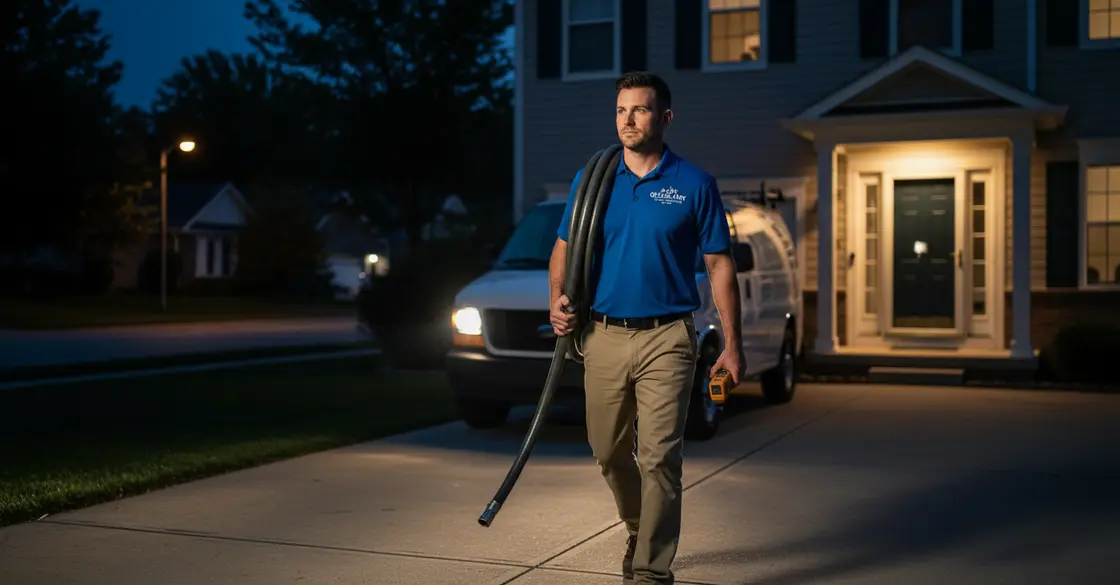
Water emergency? Don’t wait until morning.
Mold can begin growing within 24–48 hours. Materials that can be saved now may need replacement by tomorrow.
What Happens From Your Call to Dry
Fast, predictable, and documented at every step. Here is exactly how an emergency water removal call goes from the moment you pick up the phone.
You Call — We Answer
Our emergency line is staffed 24 hours a day, 7 days a week — including holidays. When you call, a real person answers, not an answering service. We'll ask a few quick questions to understand the scope and dispatch a crew immediately.
On-Site in Under 2 Hours
For most locations in our service area — McHenry, Lake, Kane, DuPage, and northern Cook County — we arrive within 2 hours. While you wait, we'll walk you through steps to limit further damage: locating shut-offs, moving valuables, and staying clear of hazardous water.
Rapid Assessment
The moment we arrive, we assess the water source, water category (clean, gray, or black), and how far it has spread. We use moisture meters to map hidden saturation behind walls and under floors — damage you can't see causes the most long-term problems.
Powerful Extraction
Our powerful extraction system removes standing water at hundreds of gallons per hour. It's the same commercial-grade equipment powering our carpet cleaning operation — but applied at full capacity for emergency water removal. This is far more powerful than portable submersible pumps.
Extraction to the Last Drop
After bulk water is removed, we extract residual moisture from carpet, padding, subfloor, and any other saturated material. We don't stop until readings confirm we've pulled as much water as extraction can reach — what remains gets addressed in structural drying.
Handoff to Drying Phase
Once extraction is complete, we set commercial dehumidifiers and air movers in place and walk you through what to expect during the drying phase. We document everything for your insurance claim: photos, moisture readings, water category, and scope of extraction performed.
What To Do While You Wait for Us
These steps can meaningfully limit damage and your final restoration cost. We’ll walk you through them on the phone — but here is a quick reference.
Emergency Water Removal — FAQ
Answers to the questions homeowners ask most when water is actively damaging their home.
How fast can you respond to a water emergency?
We answer the phone 24/7 and dispatch crews immediately. For most of our service area — McHenry, Lake, Kane, DuPage, and northern Cook County — we're typically on-site within 2 hours of your call. Response times can vary during severe weather events when multiple calls come in simultaneously, but we'll always give you an honest ETA and check in with you while en route.
What equipment do you use for emergency water removal?
We use powerful extraction systems — the same commercial-grade units that power our carpet cleaning operation. They generate far more vacuum pressure than rental pumps or shop vacs and can handle high volumes quickly, and because they're portable we can reach every area of the home — upper floors, basements, and tight spaces a fixed system can't get to. For bulk standing water we pair them with submersible pumps.
What should I do while waiting for you to arrive?
First, stop the water source if it's safe to do so — shut off the main water valve for pipe leaks, unplug leaking appliances. Then move furniture and valuables off wet surfaces. Don't use a regular vacuum on standing water. If the water source is sewage or looks discolored, stay out of the affected area. We'll walk you through specifics on the phone based on your exact situation.
Does it matter if I wait until morning to call?
Yes, it matters significantly. Mold can begin to develop within 24–48 hours in warm, wet conditions. Subfloor, drywall, and wood framing absorb water quickly — materials that could be saved with fast extraction may need replacement if left overnight. The cost of waiting almost always exceeds the cost of a middle-of-the-night service call. Call us when it happens.
Can you handle large commercial water emergencies?
Yes. Our high-powered extraction systems and commercial drying equipment are well-suited to larger-scale water events. We've handled flooded basements, multi-room water damage, and commercial property incidents throughout northern Illinois. For very large losses, we'll be upfront about whether additional resources are needed and can help coordinate.
Other Water Damage Services
Emergency extraction is the first step. Here is what comes next — and what we handle for other types of water damage.